Insight
What is the life-cycle carbon intensity of energy products sold?
This indicator measures the average GHG emissions of the energy products used by the Company’s customers, over their entire life cycle (i.e. Scope 1+2+3), from production to final use (consumption of a product, e.g. fuel), relative to the quantity of energy sold.
LIFECYCLE CARBON INTENSITY OF ENERGY PRODUCTS SOLD
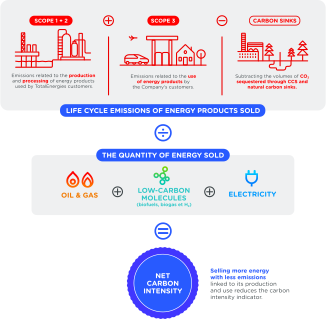
This infographic illustrates the carbon intensity of the lifecycle of energy products sold.
- Scope 1 + 2 : Emissions related to the production and transformation of energy products used by TotalEnergies' customers.
- Scope 3 : Emissions related to the use of energy products by TotalEnergies' customers.
- Carbon sinks: Emissions offset by CO2 volumes captured through CCS projects (carbon capture and storage) and natural carbon sinks.
The amount of life cycle emissions of energy products sold is divided by the quantity of energy sold in three categories:
- Oil and gas,
- Low-carbon molecules (biofuels, biogas, and hydrogen),
- Electricity.
The goal is to reduce net carbon intensity by selling more energy with fewer emissions related to its production and use, thereby reducing the carbon intensity indicator.
© TotalEnergies - June 2025
How can we reduce the carbon intensity of our products (1)?
TotalEnergies aims to reduce the life-cycle carbon intensity of its products by 25% by 2030 compared with 2015 through a set of actions:
- 01 By developing projects with low greenhouse gas emissions, such as the Marsa LNG project in Oman: all-electric and powered by a solar farm, this plant will emit less than 3 kg CO2e/boe(2).
- 02 By reducing the emissions generated by our existing operations, in particular through an energy efficiency plan. By 2024, more than 170 projects have been implemented and will be completed by 2025, reducing emissions from these sites by more than 2 Mt CO2e/year.
- 03 By offering our customers solutions that allow them to replace fuel oil with natural gas. This solution is used in particular in maritime transport.
- 04 By developing renewable energy projects worldwide. The growing share of these projects is helping to reduce the carbon intensity of our overall portfolio.
- 05 By developing low-carbon molecule projects. Among other things, we produce sustainable aviation fuel to decarbonize aviation.
- 06 By offsetting our emissions through carbon sinks such as capture and storage projects. For example, at the Snøhvit liquefaction plant in Norway, where we are partners alongside Equinor, around 9 Mt of native CO2 have been stored since 2008.
(1) Equity-accounted energy production.
(2) Versus 35 kg CO2e/boe for LNG plants on average. Source: International Energy Agency, “The Oil and Gas Industry in Net Zero Transitions”, November 2023.