
A New Dimension for High-Performance Computing
For more than 40 years, TotalEnergies has invested in supercomputers designed to model the most complex phenomena. Pangea 5 builds on the Pangea legacy launched in 2013 and marks a new step change in scale. Expected by 2027, Pangea 5 will deliver a sixfold increase in computing power, paving the way for faster and more detailed simulations.
This new system, representing an investment of more than €100 million, will make it possible to generate more accurate subsurface images, accelerate the exploration and development of low-cost, low-emissions hydrocarbon projects, and model carbon capture and storage (CCS) systems.
This increased computing power will also enable the broader deployment of artificial intelligence tools, by accelerating data processing and analysis in research and engineering activities, and by optimizing power generation and the costs of Integrated Power models.
More Powerful… and More Energy Efficient
Pangea 5 will also stand out for its improved energy efficiency compared with previous generations. For equivalent performance, its energy consumption will be reduced by around 40%, while that of its associated cooling system will be divided by five.
Another concrete measure to reduce its carbon footprint: the heat generated by the supercomputer will be recovered and used to help heat the buildings of the Pau research center, where it will be located.
By accelerating computations and expanding simulation capabilities, TotalEnergies’ teams will be able to explore a wider range of options, shorten analysis times and make better-informed decisions. A decisive advantage in an environment where operational performance, cost control and speed of execution are key drivers of project competitiveness and profitability.
 -40% energy consumption
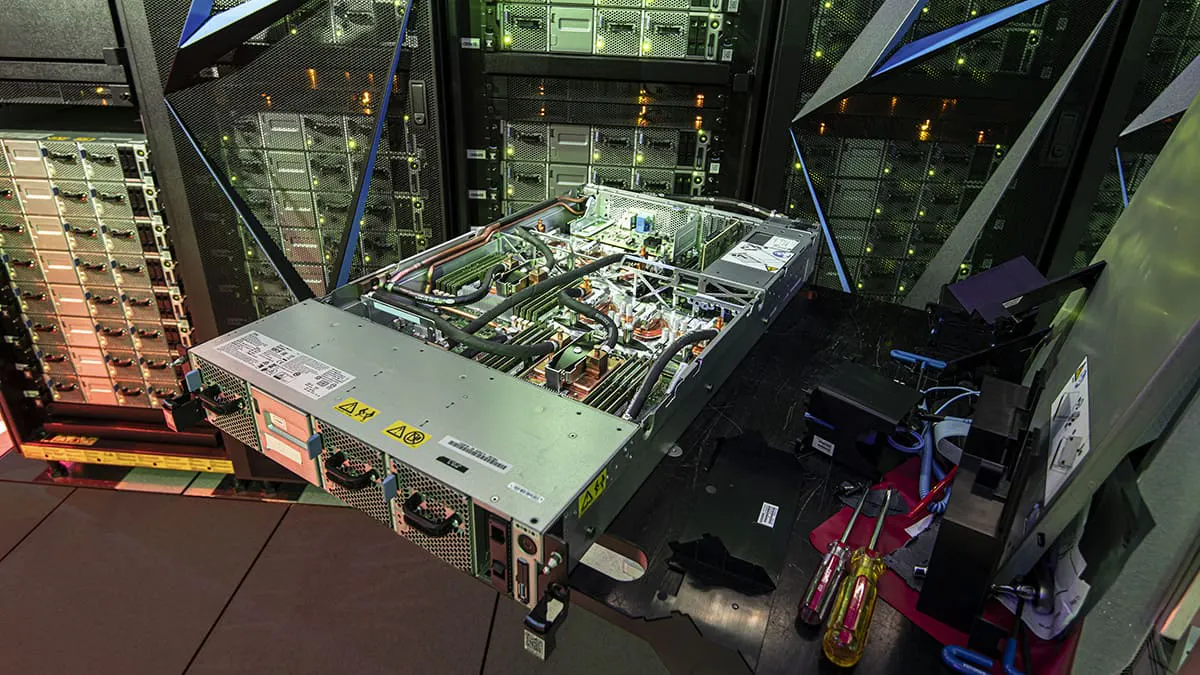
© DUCASSE Jean Michel - TotalEnergies

What Is a Supercomputer?
A supercomputer is a very high-performance computer capable of performing an extremely large number of calculations in a very short time.
In practice, it consists of thousands of servers working together to carry out highly complex computations. These servers are interconnected through an ultra-fast network and are able to process vast amounts of data stored on high-performance storage systems.
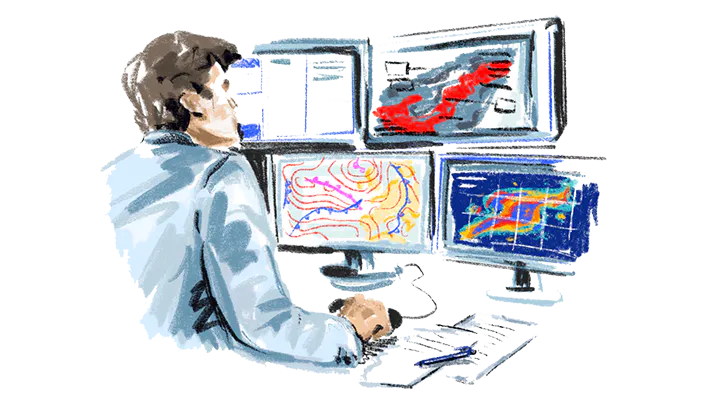
Such machines make it possible to simulate phenomena that are difficult to observe directly-whether it is subsurface behavior, wind patterns for locating wind farms, or certain industrial processes-thereby enhancing analysis and supporting better decision-making.
Pangea: Scaling Up Over Time
- 2027Pangea 5 opens a new era, with sixfold increased computing power and expanded applications in artificial intelligence
- 2024Pangea 4 introduces a hybrid architecture (on-premises + cloud), offering greater flexibility and significantly improved energy efficiency
- 2019Pangea 3 reaches computing power equivalent to 170,000 laptops combined
- 2016Upon commissioning, Pangea 2 ranks among the world’s most powerful supercomputers
- 2013Pangea 1 marks TotalEnergies’ entry into the Pangea supercomputing journey